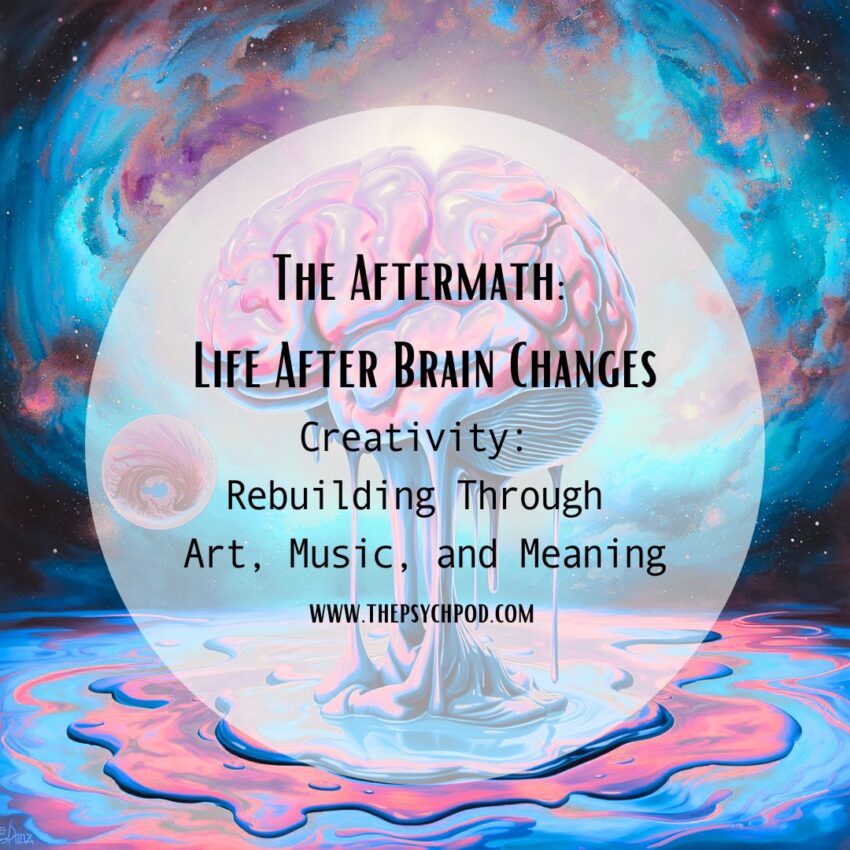
The Aftermath: Life After Brain Changes
The PsychPod Magazine | Brain & Science
Healing after neurological illness is not always only medical.
Sometimes it is creative too.
For many people, art, music, writing, movement, fashion, storytelling, photography, film, design, and self-expression become more than hobbies after illness.
They become ways to process survival.
Neurological illness can leave people feeling disconnected from their identity, body, emotions, relationships, and sense of meaning. Creativity often becomes one of the first spaces where people begin reconnecting with themselves again.
Not because creativity erases pain.
But because expression gives pain somewhere to go.
Creativity and emotional healing may involve:
• music and sound
• writing and journaling
• art and visual expression
• movies and cinema
• books and storytelling
• photography and film
• fashion and identity expression
• dance and movement
• exercise and embodied movement
• content creation
• reconnecting with imagination
• rebuilding identity through expression
The brain responds deeply to emotional and sensory experience.
Music can regulate emotion before words fully exist for it.
Art can communicate emotions that feel difficult to explain verbally.
Movement can help release stress stored within the nervous system.
Writing can help organize emotional experiences that once felt chaotic internally.
Creativity is not separate from neuroscience.
It affects:
• emotional regulation
• nervous system activation
• memory
• sensory processing
• stress response
• identity
• motivation
• neuroplasticity
• meaning-making
For many individuals, healing also happens through the stories they connect to.
A film.
A lyric.
A character.
A photograph.
A book.
A scene that suddenly makes someone feel understood in a way ordinary conversation could not.
Art often helps people process emotions indirectly when direct expression feels too overwhelming.
Sometimes people find pieces of themselves again through the things that make them feel seen.
For many people, creativity becomes part of rebuilding after survival.
A song suddenly explains emotions they could not describe before.
A photograph captures a feeling they could not verbalize.
An outfit becomes a way of reclaiming identity.
A journal entry becomes proof they survived another difficult day.
These moments may appear small externally.
Internally, they can become deeply transformative.
For some people, healing happens through movement.
Dance.
Walking.
Running.
Stretching.
Boxing.
Yoga.
Moving the body in ways that reconnect the nervous system to presence instead of survival.
Movement can become emotional processing.
A release.
A grounding experience.
A reminder that the body is still capable of expression, adaptation, and feeling alive.
I have seen this throughout my career, and I personally live with a pituitary tumor. One thing many people quietly carry is the emotional need to reconnect with parts of themselves that illness, exhaustion, grief, or survival mode temporarily buried.
Creativity can help people find those parts again.
Especially because neurological illness often changes perspective itself.
Many individuals begin experiencing music, emotion, memory, beauty, connection, and meaning differently afterward.
For some people, creativity becomes one of the few places where the nervous system finally feels:
• regulated
• expressive
• emotionally safe
• connected
• fully present
Healing is not always linear.
Neither is creativity.
Some days expression flows easily.
Other days survival itself takes all the energy a person has.
Both realities deserve compassion.
Supporting healing through creativity may involve:
• music and sound regulation
• writing and storytelling
• artistic expression
• movement and dance
• mindfulness and emotional processing
• fashion and identity exploration
• creating emotionally safe environments
• connecting with beauty, meaning, and inspiration
• allowing expression without perfectionism
• rebuilding identity gradually through creativity
For many people, healing begins when they stop viewing creativity as something “extra” and start recognizing it as part of being human.
Because art, music, movement, storytelling, and expression do more than entertain us.
Sometimes they help rebuild us.
Dr. Velmi, PsyD